Top 5 Sleep Masks for Daytime Sleep After Late Shifts
Contoured designs, cooling materials, and budget alternatives that close the light gaps blackout curtains alone can miss.
Disclosure: this post contains affiliate links. If you buy through one, MyShiftX may earn a small commission at no extra cost to you.
Blackout curtains handle most of the light in a room, but “most” still leaves a gap — a thin line around the frame, a hallway light under the door, the glow of a phone charging on the nightstand. For someone trying to sleep at 10 a.m. after a closing shift or an overnight event, that remaining sliver of light is often the difference between deep sleep and a restless few hours that don’t actually recover you.
The best sleep masks for shift workers stay comfortable for long daytime sleeps, block light completely around the eyes and nose bridge, and don’t press uncomfortably on the eyelids or leave marks. Here’s a practical look at options that work well for people who sleep while the rest of the world is awake.
What Matters in a Sleep Mask for Shift Work
- Complete light blocking around the eyes and nose without pressure on the eyeballs.
- Soft, breathable materials that don’t get hot during longer sleeps.
- Adjustable straps that stay secure without digging into the head or ears.
- Contoured or 3D designs that leave space for blinking and eye movement.
- Easy to clean and durable enough for daily use.
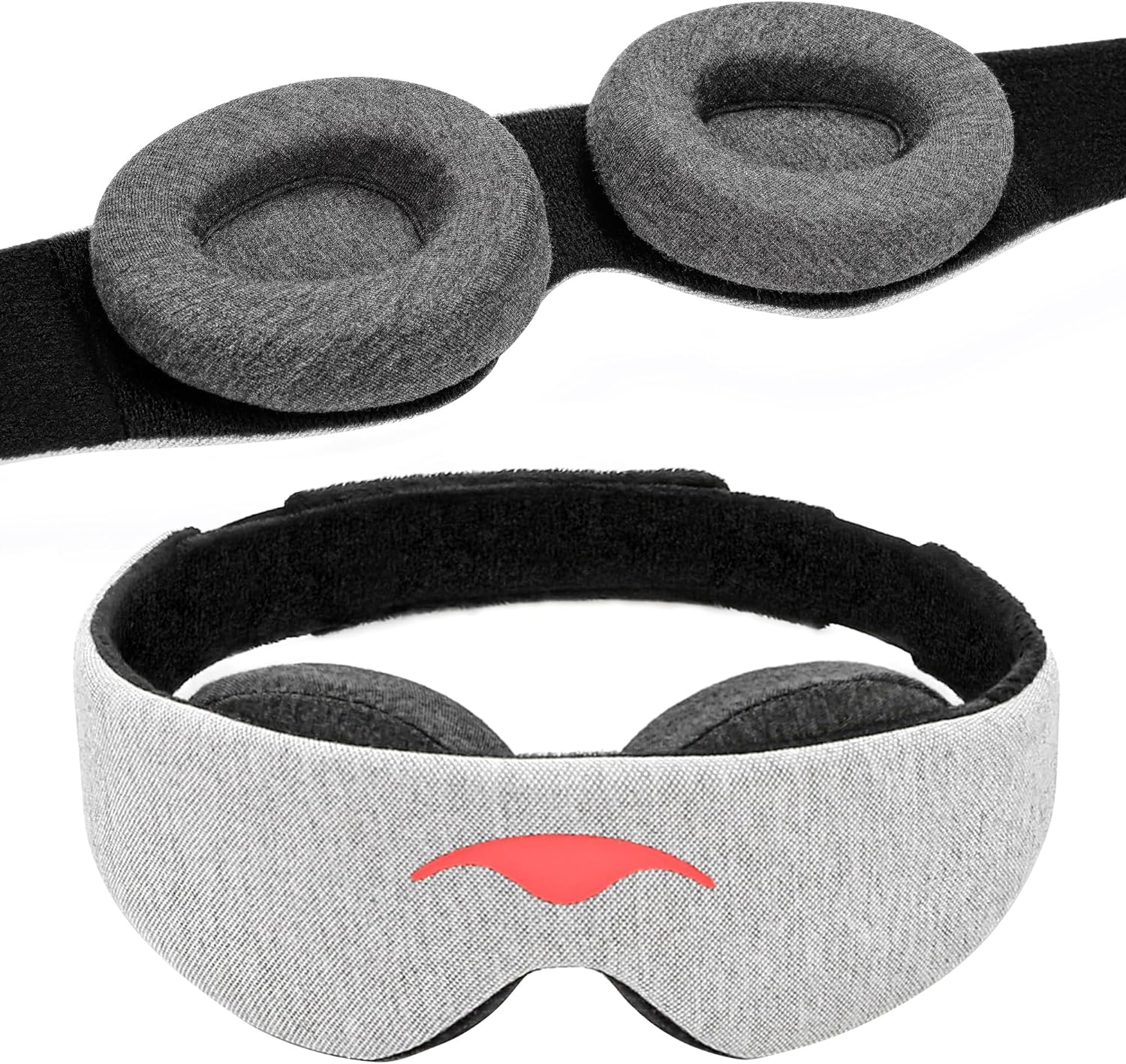
Manta Original Sleep Mask
Pros
- Excellent light blocking
- No pressure on eyes
- Stays in place
- Comfortable for long sleeps
Cons
- Higher price
- Bulkier than simple masks
Best for: Anyone serious about daytime sleep quality who has been disappointed by basic masks.
Check Current Price on AmazonThe Manta Original is frequently recommended for people who need total darkness without the mask pressing on their eyes. The contoured cups create a small space so your eyelids can move freely, and the adjustable strap system keeps it secure without the classic “mask sliding up” problem. Many night-shift workers and frequent travelers praise it for staying comfortable through full daytime sleep sessions.
The design is more substantial than basic foam masks, which helps with complete light blocking even if you move around. It’s a premium option, but the comfort and effectiveness make it a favorite for people who have tried cheaper masks and still ended up with light leaks or pressure headaches.
Manta Silk or Cool Versions
Pros
- Soft or cooling materials
- Same strong light blocking as the original
- Good for sensitive skin or warm rooms
Cons
- Premium price
- Still a more structured design
Best for: Hot sleepers, people with sensitive skin, or those who want a more luxurious feel.
Check Current Price on AmazonIf you run hot during daytime sleep or prefer a softer face feel, Manta’s silk or cooling versions build on the same contoured design with different materials. Silk feels smoother against the skin and can be gentler for longer wear. Cooling versions help if your bedroom still gets warm even with blackout curtains.
These keep the same light-blocking strengths as the original while addressing temperature and texture preferences. They’re especially useful for summer daytime sleeps or for people who find standard foam or polyester masks irritating after several hours.
Budget Soft Foam or Silk Alternatives
Pros
- Affordable
- Lightweight
- Easy to replace
- Good enough for most light-blocking needs
Cons
- Can press on eyes or shift during sleep
- Light leaks more common at the edges
Best for: Trying sleep masks for the first time or needing inexpensive backups.
Check Current Price on AmazonNot everyone needs a premium contoured mask. Many soft foam or basic silk sleep masks do a solid job of blocking light at a much lower price. Look for ones with a contoured or molded shape rather than flat designs that press directly on the eyes, and check for adjustable straps and breathable materials.
These work well as a first mask or as a backup. They may not match the absolute darkness or long-wear comfort of the Manta-style options, but for many shift workers they provide enough improvement over sleeping without any mask to be worth trying.
Bluetooth / Sleep-Sound Masks
Pros
- Combines darkness and sound
- Convenient for some noise environments
Cons
- Bulkier
- Requires charging
- Sound quality varies
Best for: People whose main remaining sleep disruptor is daytime noise.
Check Current Price on AmazonSome sleep masks integrate thin speakers or Bluetooth so you can play white noise, rain sounds, or podcasts without earbuds. For shift workers dealing with daytime household noise, street sounds, or roommates, this can be a useful combination of darkness and sound masking.
The trade-off is bulk and battery management. These are secondary options — priority should still be solid light blocking and comfort. Use them if noise is a consistent problem that a simple mask plus a separate speaker or fan doesn’t solve.
Weighted or Deep-Pressure Sleep Masks
Pros
- Gentle pressure can help you relax and fall asleep faster
- Blocks light as a side effect of the design
- Some people find the weighted feel calming
Cons
- Not for everyone — can feel too warm or restrictive
- Heavier than a standard mask, so less ideal in a hot room
Best for: Restless sleepers or anyone who likes the calming feel of gentle weight in addition to light blocking.
Check Current Price on AmazonWeighted sleep masks use small glass or plastic beads sewn into the fabric to apply gentle, even pressure across the eyes and temples — the same idea behind weighted blankets, scaled down to the face. For some people that pressure is genuinely calming and helps them settle into sleep faster, which matters when you’re trying to fall asleep on a schedule your body doesn’t agree with.
They block light effectively as a byproduct of full coverage, but that isn’t really the selling point — the weight is. This is a more individual preference than the other options here: some shift workers swear by it, others find the extra warmth and pressure counterproductive, especially in a bedroom that already runs hot during the day.
A Mask Won’t Fix a Bad Sleep Setup on Its Own
A sleep mask solves one specific problem — light — and it’s easy to expect it to fix daytime sleep by itself. It won’t. Temperature matters just as much: a room in the high 70s or warmer actively fights sleep regardless of how dark it is, so a fan or a lower thermostat setting during the day is worth as much attention as the mask itself. Phone use in the twenty minutes before trying to sleep undoes some of what the mask is doing, since a bright screen right before bed works against the darkness you just created.
The combination that actually works for most night and closing-shift workers is boring but effective: blackout curtains for the bulk of the light, a mask for what leaks through, a cool room, and a short no-screens buffer before lying down. Any one of those alone helps a little. Together they’re usually the difference between four broken hours and a full, genuinely restorative sleep.
Practical Tips
- Put the mask on after you’re already in bed and the room is as dark as possible so you can adjust the fit.
- If the strap leaves marks or feels tight, loosen it or try a different design — comfort matters more than maximum tightness.
- Keep a clean spare so one can be washed while the other is in use.
- Pair with blackout curtains for the best overall darkness. The mask handles residual light; the curtains handle the bulk of the problem.
A good sleep mask is a small, portable piece of gear that can meaningfully improve daytime sleep quality. Start with a well-reviewed contoured option if you can, or a solid budget mask if you’re testing the idea. Once you experience sleeping in true darkness after a late shift, it’s hard to go back.
A sleep mask is one of the most portable pieces of the daytime-sleep toolkit. Even if you travel, stay in different places, or share a room, it goes with you and creates darkness when curtains alone are not enough. Consistency of use matters more than owning the most expensive model.
See what a shift board actually looks like
A walkthrough of the Wall, the calendar, and how a trade gets settled.
Explore the demo