Top 6 Portable Chargers & Power Banks for All-Day Shifts
Capacity, fast charging, and pocket-friendly sizing for keeping a phone alive through a full shift and the ride home.
Disclosure: this post contains affiliate links, and a purchase through one may earn MyShiftX a small commission at no extra cost to you.
A dead phone at 2 p.m. on a double is a specific kind of stress that has nothing to do with the actual work. Suddenly you can’t check what time your ride is coming, can’t see if a coworker texted about covering the last hour, can’t pull up the schedule to settle an argument about who’s closing. None of that is dramatic on its own, but it adds friction to a day that already has enough of it.
The best power banks for this kind of work are high-capacity enough to fully recharge a modern phone at least once (ideally more), charge reasonably fast, fit in a pocket or small bag, and survive being tossed around daily.
What Matters for Shift Workers
- Capacity (measured in mAh) high enough for at least one full phone charge, preferably two.
- Fast-charging support (USB-C Power Delivery or similar) so you’re not waiting forever on a short break.
- Size and weight that won’t feel like a brick in a pocket or apron.
- Reliable build quality and safety certifications.
- Enough ports or the right cable type for your phone and any other devices.
Anker PowerCore / High-Capacity Models
Pros
- Reliable capacity and performance
- Good safety record
- Wide range of sizes
- Solid charging speeds
Cons
- Premium models cost more
- Larger capacities add weight
Best for: Most people who want a dependable daily power bank that just works.
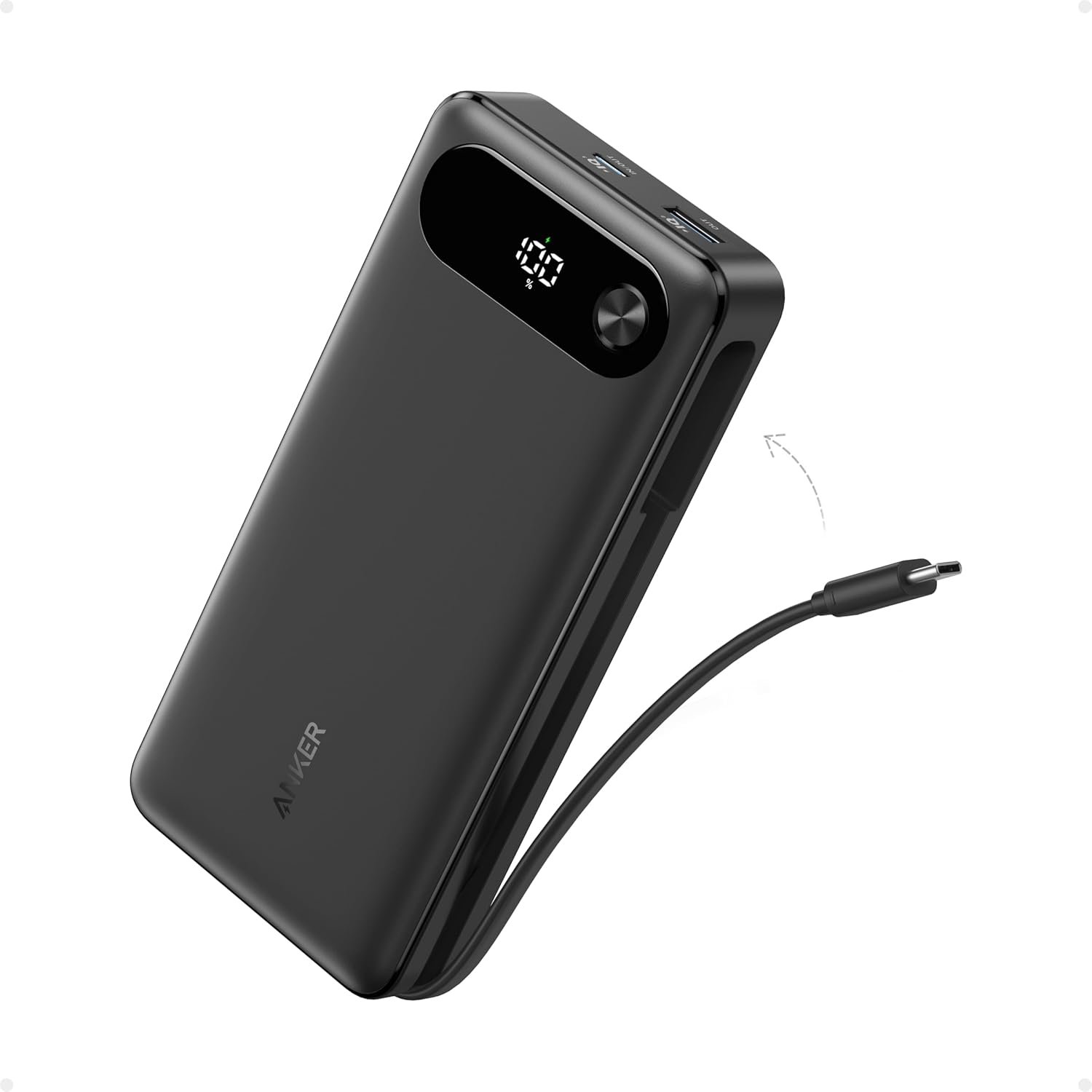
Check Current Price on AmazonAnker is one of the most consistently recommended brands for power banks because the capacity ratings tend to be honest, the build quality holds up, and charging speeds are competitive. Their higher-capacity PowerCore models can fully recharge most modern phones one to two times (or more, depending on the exact model and your phone’s battery size).
Many shift workers keep an Anker in a bag or locker as the daily driver. They’re widely available, come in different sizes, and have a strong track record for not failing after a few months of use.
Slim Pocket-Friendly Options
Pros
- Easy to carry every day
- Less noticeable weight
- Often enough for one solid recharge
Cons
- Lower total capacity
- May not support the fastest charging speeds
Best for: People who will only use a charger if it truly fits in a pocket without bulk.
Check Current Price on AmazonIf you hate carrying extra bulk, slim power banks that fit in a back pocket or small apron pouch are more likely to actually come with you every day. These usually offer lower total capacity than the big brick-style banks, but many still deliver a full phone charge or close to it.
Look for models that support at least moderate fast charging and have a flat profile. Some include built-in cables to reduce the number of separate items you need to remember.
Fast-Charging USB-C Models
Pros
- Faster recovery during short breaks
- Future-proof for newer phones
- Efficient
Cons
- Can cost more
- Higher output models sometimes run warmer
Best for: Anyone with a modern phone who wants the most charge in the least time.
Check Current Price on AmazonModern phones charge much faster with USB-C Power Delivery (PD) or equivalent. A power bank that supports higher wattage output can give you a meaningful charge during a short break instead of a trickle. This matters when your break is only 15–30 minutes and you need the phone alive for the rest of the shift or the drive home.
These models are especially useful if your phone supports 20W+ charging. Pair them with a good USB-C cable for best results.
Solar or Rugged Versions
Pros
- More durable
- Some weather resistance
- Solar as a backup
Cons
- Heavier
- Solar is slow
- Higher price for the rugged features
Best for: Outdoor park and event staff who need extra toughness.
Check Current Price on AmazonFor outdoor theme park, festival, or event work where you may be away from outlets all day and exposed to weather, rugged or solar-assisted power banks add durability and a backup charging method. Solar charging is usually slow and best treated as a supplement rather than the primary power source, but the tougher shells and weather resistance can be useful.
These are secondary options for most people — standard high-capacity banks still handle the majority of shift needs. Consider them if your role regularly involves long outdoor stretches or rough handling.
INIU or Similar High-Value Fast Chargers
Pros
- Strong charging speed for the price
- Compact and easy to carry
- Consistently good reviews for reliability
Cons
- Less brand recognition than Anker
- Smaller accessory ecosystem
Best for: Shift workers who want Anker-like performance without the premium price tag.
Check Current Price on AmazonINIU and similar mid-tier brands have built a strong reputation among people who want fast charging and a compact form factor without paying Anker’s premium. Charging speeds are often surprisingly competitive for the price, and the compact sizing makes them easy to keep in a bag or locker without noticing the extra bulk.
The brand name carries less weight than Anker’s, and the accessory ecosystem (cases, matching cables, multi-packs) is smaller. For most shift workers that trade-off is worth it — the core job, fast reliable charging, is there at a lower price.
MagSafe / Magnetic Wireless Power Banks
Pros
- No cable needed
- Snaps on and charges hands-free
- Slim profile
Cons
- Wireless charging is slower and less efficient than wired
- Only works with MagSafe-compatible phones
- Magnetic hold can slip loose in a pocket
Best for: iPhone users who want a quick charging boost on a break without digging for a cord.
Check Current Price on AmazonMagnetic wireless power banks snap directly onto the back of a MagSafe-compatible iPhone and start charging with no cable involved. For a short break where digging out a cable and finding the port isn’t worth the hassle, snapping one on and continuing to use your phone normally is genuinely convenient.

The trade-off is charging speed: wireless is slower than a wired connection, so this is better as a top-up than a full recharge from empty. It also only works with MagSafe-compatible phones, and the magnetic hold can work loose if the bank is jostled around in a pocket or apron.
Why Your Phone Is Part of Your Shift, Not a Distraction From It
For most shift workers, the phone isn’t a break-room luxury anymore — it’s how the schedule actually gets managed. Checking who’s covering the next section, confirming a shift swap went through, or seeing a message about a last-minute coverage request on a board like MyShiftX all happen on that one device. A dead battery mid-shift doesn’t just cost you music or texting; it can mean missing the exact notification that would have let you pick up an extra shift or confirm someone’s covering yours.
That’s the practical case for treating a charger as work equipment rather than an optional gadget. The cost of carrying one is a few dollars and a few ounces. The cost of not having one, on the one day it actually matters, is usually bigger than the charger itself.
Practical Buying and Use Tips
- Check the real capacity (mAh) and look for reviews that mention actual phone recharges rather than just the number on the box.
- Match the output to your phone: USB-C PD is ideal for most newer devices.
- Keep the power bank itself charged. A dead bank helps no one.
- Carry a short cable that matches your phone so you’re not hunting for one during a break.
- For very long days, a higher-capacity bank (10,000–20,000 mAh range) is usually more useful than the smallest possible option.
- Store it somewhere accessible — locker, bag, or apron — so you actually use it when the battery warning appears.
A dead phone mid-shift is more than an inconvenience; it can leave you without schedules, communication, navigation, or a way to coordinate with coworkers. A reliable portable charger removes that risk. Start with a well-reviewed Anker or similar high-capacity model if you want maximum reliability, or a slim option if daily carry convenience is the deciding factor. Once you have one that consistently gets you through the day, it becomes one of those pieces of gear you don’t leave home without.
Treat the power bank like any other essential shift tool: charge it when you charge your phone, keep it in the same accessible place, and replace it when capacity starts to drop noticeably. A reliable one removes a recurring source of end-of-shift stress.
See what a shift board actually looks like
A walkthrough of the Wall, the calendar, and how a trade gets settled.
Explore the demo