Best Blackout Curtains for Night Shift & Closing Crews
True light blocking, thermal benefits, and installation tips that actually make a bright bedroom dark enough for real daytime sleep.
This post contains affiliate links, and MyShiftX may earn a small commission if you buy through one, at no extra cost to you. We only feature gear we’d actually put in our own bedrooms after a closing shift.
The math is against anyone who sleeps during the day. A body clock built for millions of years of daylight does not reset itself just because your schedule says otherwise, and light through a window is the single strongest signal telling your brain it is time to be awake. Work a close, a night audit, or an early-morning theme park shift, and you are fighting that signal every single time you try to sleep.
Blackout curtains are the cheapest, least glamorous fix for that fight — and one of the few upgrades that pays off every single day you own it. A properly blacked-out room does not just make sleep possible; it changes how deep that sleep gets, because your body stops half-waking every time a delivery truck’s headlights sweep the ceiling.
This guide is built around one question: which curtains actually get a room dark, not which ones just look dark on a product page.
What Matters for Shift-Worker Sleep
- True light blocking (look for claims of 85–99%+ and check darker colors).
- Enough fabric width and length to cover the window fully and minimize edge gaps.
- Thermal properties that help keep the room cooler in summer or warmer in winter.
- Easy installation (grommets or rod pocket) and machine-washable fabric.
- Price that lets you cover every bedroom window you need without stretching the budget.
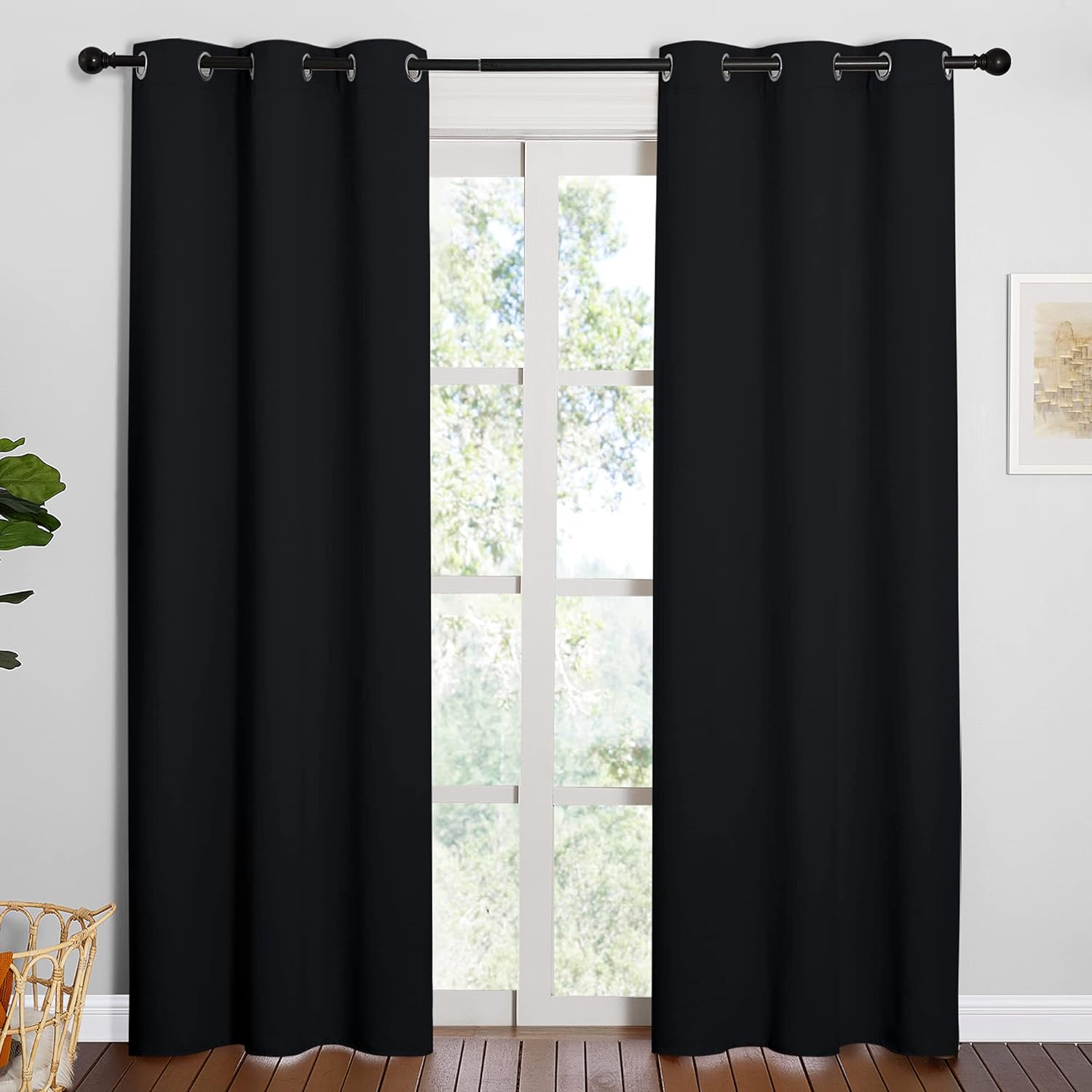
NICETOWN 100% Blackout Curtains
Pros
- Strong light blocking for the price
- Good thermal benefit
- Massive size/color selection
- Easy to install
Cons
- Edge light can still leak without careful rod placement or side sealing
- Lighter colors are less effective
Best for: Most night-shift and closing-crew workers who need reliable daytime darkness without spending a fortune.
Check Current Price on AmazonNICETOWN is the most frequently recommended blackout curtain brand for shift workers and light-sensitive sleepers. Their triple-weave fabric (sometimes called Plylux or similar) blocks a high percentage of light — often cited in the 85–99% range depending on color and installation. Darker colors (black, navy, charcoal) perform best; lighter colors let more light through the fabric itself, which is easy to forget when a soft gray looks plenty dark on a screen but lets in a surprising amount of afternoon sun in person.
Reviewers who sleep during the day consistently report that these curtains make a dramatic difference. Many call them the single biggest improvement to their daytime sleep. The fabric also provides noticeable thermal insulation, helping keep rooms cooler in summer and reducing drafts in winter. They come in a huge range of sizes and colors, and most styles are machine washable.
Premium Thermal / Noise-Reducing Curtains
Pros
- Better heat and noise control
- Often denser light blocking
Cons
- Higher price
- Heavier fabric can be harder to hang on lightweight rods
Best for: Hot climates, west-facing windows, or bedrooms near noisy streets.
Check Current Price on AmazonIf your bedroom gets very hot in the afternoon or you deal with street noise as well as light, look for heavier thermal or multi-layer blackout curtains. These often add a foam or insulated backing that improves both light blocking and temperature control. Some also reduce outside noise more effectively than basic triple-weave panels — useful if your window faces a street, a loading dock, or a neighbor who mows at 10 a.m.
These cost more than entry-level NICETOWN-style curtains but can be worth it for rooms with strong afternoon sun or thin walls. Look for models specifically marketed for energy efficiency or noise reduction, and still choose darker colors for maximum darkness.
Blackout Curtain Liners or Layered Solutions
Pros
- Flexible
- Works with existing décor
- Targets the last light leaks
Cons
- Extra step to install
- Not as seamless as a single high-quality pair
Best for: Renters, people who want to keep decorative curtains, or those chasing absolute darkness.
Check Current Price on AmazonIf you already like your existing curtains or live in a rental where you can’t (or don’t want to) replace everything, blackout liners or clip-on blackout panels can help. Some people also add temporary blackout blinds or use Velcro/side tracks to seal the edges of regular blackout curtains without touching the wall or the window frame.
These solutions are less elegant than a full dedicated pair but can close the remaining light gaps that prevent true darkness. For serious daytime sleepers, combining a good blackout curtain with side sealing or a secondary layer often produces the best results.
How Dark Is “Dark Enough”?
Blackout percentages on product listings are marketing claims, not lab measurements, and two curtains both claiming “99% blackout” can perform very differently once they’re actually hung on your window. A simple way to judge a room without any special equipment: close the curtains at midday, let your eyes adjust for a minute, and hold up your phone. If you can still comfortably read the screen at low brightness without the room feeling notably brighter than night, you have real darkness. If you can make out the outline of furniture across the room, there is still enough ambient light getting in to interrupt deep sleep for a light-sensitive sleeper.
Most of the “this curtain didn’t work” complaints in reviews are not about the fabric — they are about gaps. Light comes in around the sides where the panel doesn’t fully overlap the frame, over the top where the rod sits too far from the ceiling, and through thin panels in a pale color that photographs dark but is not. Fixing the gaps usually does more for actual darkness than upgrading to a more expensive fabric.
Installation Tips That Matter
- Mount the rod as close to the ceiling as possible and extend it several inches past the window frame on each side. This reduces top and side light leaks.
- Overlap panels in the middle if using two panels.
- Darker colors block more light through the fabric itself.
- For maximum darkness, consider magnetic or Velcro side seals, or a wraparound rod.
- Wash before first use if the fabric has a chemical smell, and follow care instructions to keep the blackout coating intact.
Practical Notes for Shift Workers
Blackout curtains work best as part of a small system: combine them with a good sleep mask for residual light, keep the room cool, and protect the sleep window the same way day-shift people protect nighttime. Many night-shift workers report that once the room is truly dark, the quality of daytime sleep improves enough that they feel more recovered for the next shift.
Even inexpensive blackout curtains can transform a bright room if installed correctly. Measure your windows carefully, choose a dark color, and give yourself enough width so the panels overlap and extend past the frame. The goal is a room dark enough that you don’t notice daylight when you close your eyes.
Start with a well-reviewed triple-weave option in a dark color sized to fully cover your windows. If edge light remains a problem, add simple sealing measures. The difference between “pretty dark” and “actually dark” is often what separates restless daytime sleep from real rest after a long closing shift or overnight event.
Once the room is reliably dark, many shift workers notice that the quality of daytime sleep improves enough to make the next shift feel more manageable. Blackout curtains are infrastructure rather than a daily gadget — install them well once and they keep working, long after the shift that made you buy them.
See what a shift board actually looks like
A walkthrough of the Wall, the calendar, and how a trade gets settled.
Explore the demo